

My method of cleaning....Seeking advice

DFL89

New Member
Joined
Aug 27, 2023
Messages
14
My interests are mostly 1800's items (Seminole war items here in Florida etc), which is a lot of Iron item (such as square nails, tools, belt buckles perhaps etc).

So, I would place these items upon returning home into "Metal restore rust removal bath" for 24/48 hours and scrub to get it as close to as pre-rust as possible and cleaned from dirt etc.

Then, I would follow-up with Rust Olem Gloss protective enamel clear spray can. This in time, has shown to NOT be very effective overall sadly.

Any ideas or tips? I have limited space, so electrolysis is essentially out. I saw a product spray can that just seals in the finds "as is" to prevent any additional rusting, but I can't recall the product name.

There is a very famous historical site near here, and they thought humidity and ac would be enough for their finds - less than a year later - and a complete disaster, items just crumbling. I was rather shocked by this, as these are the "professionals" and those who should know better on preservation along with the funding they get and endless Colleges and their studies involved.

Thanks for any info or tips on how you may go about preserving iron and/or other metal finds that don't hold up well once they're out of the ground.

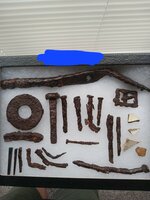
Attached is an image of my finds from about 2 years ago using the above mentioned methods.
 

Attachments

  • 20230716_155146(1).jpg
    20230716_155146(1).jpg
    149.9 KB · Views: 322
If you are in no rush just soak them in olive oil for months or even years then brush with water and soft bristle toothbrush, only method I know of that won't leave them looking whizzed. Don't think there is any quick method of cleaning old crusted items without wrecking them
 
Electrolysis would likely get them cleaner, but definitely a more aggressive approach. Problem with displaying iron is if it's exposed to any kind of moisture, it's going to turn orange again, unless you seal it. Love restoration projects, keep up the good work!
 
Electrolysis would likely get them cleaner, but definitely a more aggressive approach. Problem with displaying iron is if it's exposed to any kind of moisture, it's going to turn orange again, unless you seal it. Love restoration projects, keep up the good work!
Thank you for the reply. There are so many methods when searching online and Iron is tough clearly - as soon as it's out of the ground and hits oxygen - "game on."

I think I put too much value into iron relics and should focus more on other metals and items, but just the thought of say a square nail, the work that went into making it, what it was used on etc, is too full of history to ignore. But yeah, my method isn't the best as of now in preservation.
 
I use a ultra sonic cleaner. There inexpensive.
🪰 Fly
Do you have a specific kind/brand that you like? I am not familiar with these.

Would the work good for heavy rust on old iron objects etc, and then what method to "coat" to prevent further rust?
 
Do you have a specific kind/brand that you like? I am not familiar with these.

Would the work good for heavy rust on old iron objects etc, and then what method to "coat" to prevent further rust?
An ultrasonic won't do crap on old iron. One you got em clean as you can rub vasoline on them on move on.

Steve
 
If I wanted to clean iron objects and preserve them I would use electrolysis first and then a good rust converter (https://en.wikipedia.org/wiki/Rust_converter). Here are some options just grabbed online quickly: https://mechanicbase.com/reviews/best-rust-converter/

The electrolysis doesn't need to be long term but can also be short term for loosening up crusted, flakey rust if that is desireable. I use a cheap Harbor Freight trickle charger and a glass jar, beaker or some such. Plastic would also work or a small aquarium. Negative clip to the item to clean and positive clip to a piece of iron such as a nail or bolt. Mix a tablespoon of baking soda into a couple cups of water (for smaller things), pour it into the container and plug in the trickle charger and you are off to the races. Let it go for 5 minutes, shut it off (unplug) and see if that is enough to suit your needs. Longer as needed.
 
I do a lot with electrolysis, you can see my threads it's a lot smaller of a setup then you might think.

Either way, afterwards I use a paint called "gemplers" to kill/prevent any rust. It will darken the iron a bit but everything comes out nicely. It had been recommended to me by someone who restored cannon balls and artillery.
 
Thank you everyone for the replies! So many different methods, but some great info.
 
I know this is an old thread but has anybody tried the hot wax treatment.This is used to preserve what is left of an item after cleaning or one that is too delicate to physically clean.......i use it on old Roman bronze coins that are starting to go "powdery" after being in the earth for so long..
You need a small,shallow metal dish and some candles........cut chunks of the candle into the shallow dish,enough to cover your item when its melted and then put the dish onto a suitable burner to melt the wax.
When the wax has melted,look for the first sign of smoke coming from the wax.......as soon as it starts smoking place your object in the wax.Your item will start to fizz,this is the wax entering the porous surface of your item and expelling any air.......when the fizzing stops turn off the heat and remove the item from the wax.The wax will have penetrated any porous surfaces and will prevent any oxygen/moisture re entering.......it also brings back detail on crusty coins.
Just be careful when using this procedure.....it is important to place the item into the wax as soon as the wax starts to smoke and make sure you have a good pair of tweezers etc to remove the item from the wax after it has stopped fizzing.The item can be placed on a length of paper kitchen towel to remove any excess wax.
 
Try white vinegar, eats away rust.
As I don't do any artifact restoration, I got some chain that I wanted to use with my tractor, and it was a rusted stiff mess. I had heard that soaking in white vinegar would do wonders. So, in a plastic pail they went, and I poured enough vinegar in to cover the chains about two inches higher. Covered the pail and walked away for a week. Word of warning! If you stick your bare hand in that slurry, be prepared to wear yellow orange hands for a long time. Trust me! After one week the chains were looking good, but I wanted better, so I left them in for another week. They came out bright and shiny after the water rinse. Hung them up to dry then put them back in a clean pail with half quart of motor oil and kept rotating the pail till they were coated with oil. Hung them up again to drain off the excess oil and now they are stored in a dry pail till I need them. Still nice and shiny. PS. I don't know if I would use this process on an old iron artifact though. Might not get the result you wanted.:blink::shout::dash2:
 
Back
Top Bottom